Professional tool belts are more than just accessories; they are essential extensions of a tradesperson’s body that directly impact daily productivity, safety, and long-term comfort. Whether you’re an electrician running conduit, a carpenter framing houses, or a plumber servicing pipes, the right belt keeps your most-used tools at your fingertips while distributing weight evenly to prevent back strain. In this ultimate guide, we explore every aspect of selecting, organizing, and maintaining a professional-grade tool belt. We’ll break down different types, must-have features, proven organization strategies, and the top brands trusted by veterans in the trades. By the end, you’ll know exactly how to choose a belt that grows with your career and turns chaotic tool hunts into seamless workflow.

Why Professional Tool Belts Matter More Than You Think?
A quality tool belt isn’t a luxury—it’s a productivity multiplier. Carrying tools in your pockets or a loose bucket leads to lost time, damaged equipment, and increased injury risk. Studies from construction safety organizations show that properly designed belts can reduce lower-back strain by up to 40% by balancing load across the hips and shoulders.

Ergonomics and Injury Prevention
Modern belts use padded lumbar support, adjustable suspenders, and quick-release buckles to keep your posture natural throughout long shifts. Weight is distributed away from the spine, minimizing fatigue during overhead work or repetitive bending.
Speed and Efficiency on the Job
With tools sorted into dedicated pouches, you eliminate the need to walk back to a toolbox every few minutes. This can shave 30–60 minutes off a typical workday, translating into higher earnings for contractors and faster project completion for employees.

Types of Professional Tool Belts
Not every belt suits every trade. Understanding the main categories helps you narrow your choices quickly.
Traditional Leather Tool Belts
Renowned for durability and classic styling, full-grain leather belts mold to your body over time and offer exceptional tool retention. They excel in heavy-construction environments where abrasion resistance is critical. However, they can be heavier and require occasional conditioning to prevent cracking.
Lightweight Nylon and Polyester Belts
These synthetic options dominate among electricians and service technicians who climb ladders frequently. Ballistic nylon resists tears, dries quickly after rain, and weighs significantly less than leather. Many feature modular pouch systems that let you customize exactly what you carry.
Hybrid and Specialty Designs
Some belts combine leather backing with nylon pouches for the best of both worlds. Others include built-in suspenders or even integrated knee-pad attachments for flooring installers. Framing belts emphasize large hammer holders and nail pouches, while electrician models prioritize screwdriver loops and voltage-tester slots. (178 words)
Key Features to Look For When Selecting a Tool Belt
Choosing the perfect belt requires evaluating several critical factors beyond basic price.
Material Quality and Construction
Look for reinforced rivets, double-stitched seams, and heavy-duty webbing rated for daily abuse. Premium leather should be 8–10 oz thickness; nylon should use 600–1000 denier fabric with water-repellent coatings.
Fit, Adjustability, and Comfort
A good belt offers multiple sizing options or fully adjustable straps. Padded hip pads and breathable mesh backing prevent chafing. Quick-release buckles allow fast removal when climbing or driving.
Weight Distribution and Capacity
The best designs spread load across the hips rather than hanging everything from the waistband. Integrated D-rings for lanyards and tape-measure clips add practical versatility without extra bulk.

How to Organize Your Tool Belt Like a Pro
Organization transforms a good belt into a productivity powerhouse. The goal is muscle memory: reaching without looking.
Strategic Pocket Placement
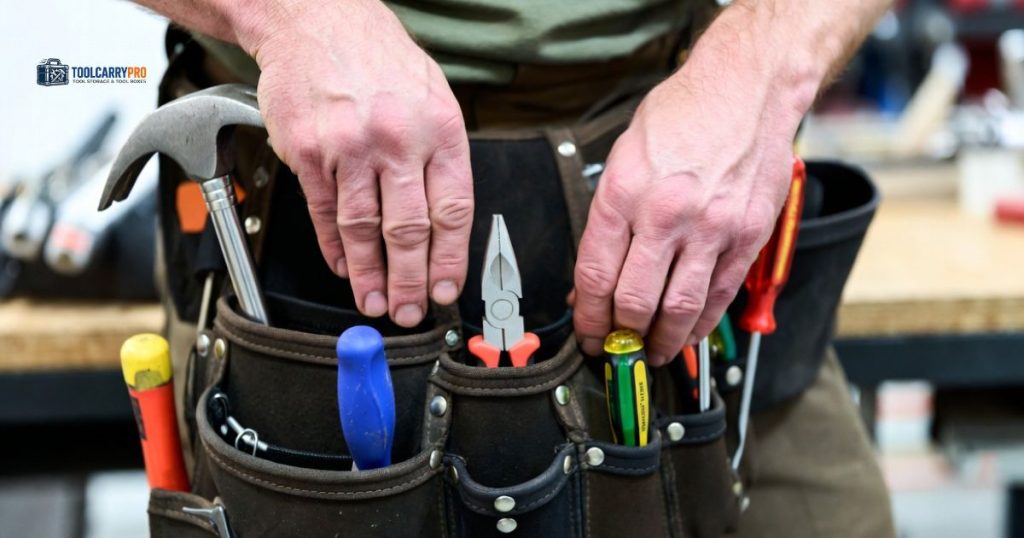
Place your most frequently used tools—hammer, tape measure, utility knife—in dominant-hand front pouches. Heavier items like cordless drills or impact drivers go in lower, wider pockets near the hips for balance. Keep sharp tools in sheaths to prevent accidental cuts.
Daily Workflow Optimization
Group tools by task: electrical section on the left, fasteners on the right. Use small vertical slots for pencils, markers, and testers. Many pros add custom foam inserts or modular clip-on pouches for evolving needs. Review your layout every few months as your work habits change.
Top Brands Leading the Professional Tool Belt Market
Several manufacturers have earned legendary status among tradespeople through decades of real-world testing.
Occidental Leather
Widely considered the gold standard for leather belts, Occidental offers handcrafted designs with exceptional weight distribution. Their “Pro” series features patented pockets that hold tools securely yet release instantly.
DeWalt and Milwaukee
These power-tool giants have expanded into belts with tough nylon construction and modular systems that integrate seamlessly with their tool ecosystem. DeWalt emphasizes durability at competitive prices, while Milwaukee focuses on innovation like magnetic holders.
Klein Tools and Gatorback
Klein delivers trade-specific designs beloved by electricians for their precise pocket layouts. Gatorback stands out for ultra-comfortable padded suspension systems that reduce fatigue on multi-story jobs.

Maintenance Tips to Extend the Life of Your Tool Belt
Proper care keeps your belt performing like new for years. Wipe leather weekly with saddle soap and condition every three months. For nylon, machine-wash on gentle cycle and air dry. Inspect rivets and stitching monthly, replacing worn pouches before they fail on the job. Store flat or hung properly to avoid creases.
Conclusion: Invest in a Belt That Works as Hard as You Do

Selecting the right professional tool belt is an investment in your career longevity, daily comfort, and overall efficiency. By understanding types, prioritizing key features, organizing strategically, and choosing from proven top brands, you’ll create a system that feels like a natural extension of your body. Start by assessing your trade’s unique demands, try on several options in-store if possible, and build from there. A well-chosen, properly maintained tool belt will pay for itself many times over in saved time and reduced physical strain. Whether you’re just starting out or a seasoned veteran upgrading your gear, the perfect belt is waiting to elevate your workflow. Your tools deserve a home that’s as professional as you are—make the smart choice today.