When you’re knee-deep in a maintenance job — whether you’re fixing a leaking pipe, patching drywall, or rewiring an outlet — the last thing you want is to waste precious minutes searching for the right tool. Every professional tradesperson and dedicated DIY enthusiast knows the frustration of setting a wrench down somewhere “safe,” only to spend the next ten minutes hunting for it. That’s exactly where a belt clip tool pouch changes the game entirely.
A belt clip tool pouch is a compact, wearable organizer that attaches directly to your belt or waistband, keeping your most-used tools within arm’s reach at all times. It sounds simple — because it is. But that simplicity is precisely what makes it one of the most underrated pieces of equipment in any maintenance toolkit.
What Is a Belt Clip Tool Pouch?
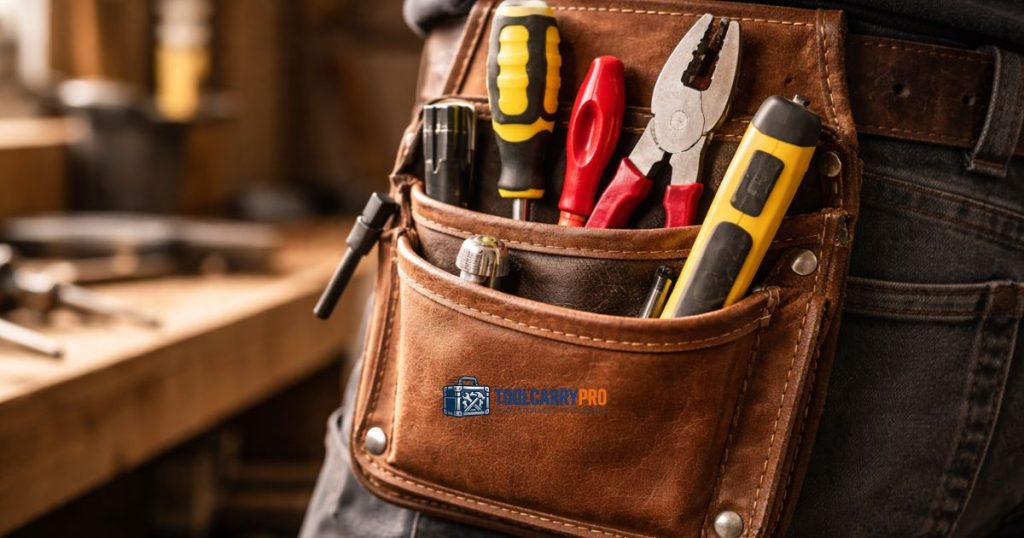
A belt clip tool pouch is a small bag or holster, typically made from leather, heavy-duty nylon, or canvas, designed to hang from a belt or clip onto a waistband using a sturdy metal or reinforced plastic clip. Unlike a full tool belt or bulky tool bag, a belt clip pouch is minimalist by design — built to carry a curated selection of tools rather than your entire workshop.
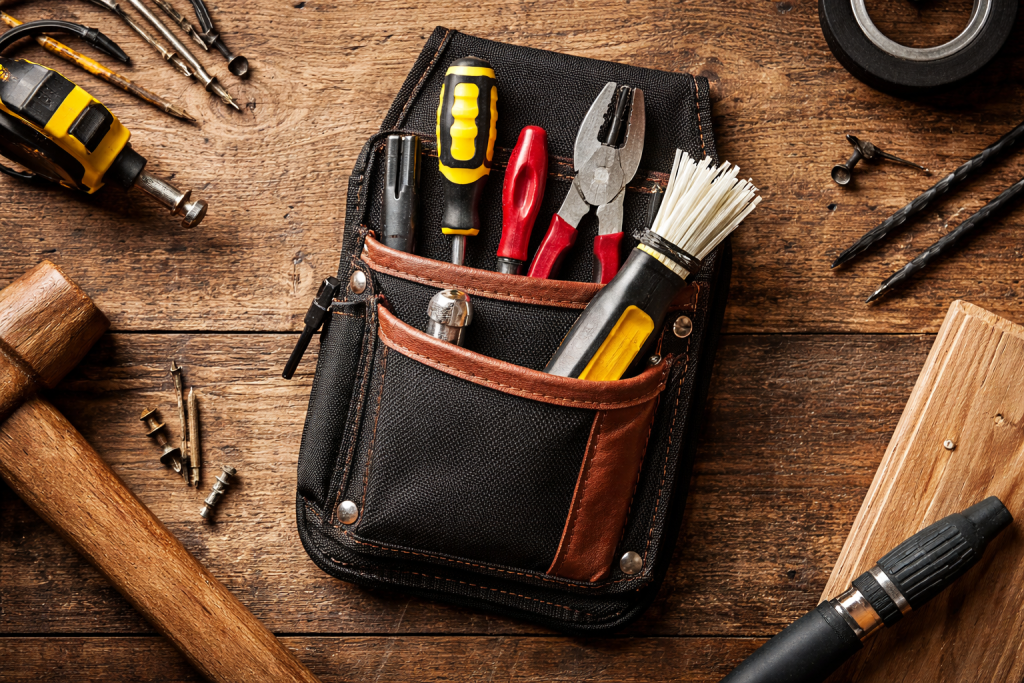
Most pouches feature multiple pockets, tool loops for screwdrivers or pliers, and a main compartment for bulkier items. They are available in single-pocket designs all the way up to multi-pocket configurations that can comfortably hold eight to twelve tools at once.

The Core Benefits of Using a Belt Clip Tool Pouch for Maintenance
1. Instant Access to Essential Tools
The number one reason maintenance professionals swear by belt clip pouches is speed. When you’re working on a circuit breaker panel, climbing a ladder to check HVAC vents, or crawling under a sink, you don’t have time to walk back to your toolbox every time you need a different screwdriver.
With a belt pouch, your Phillips head, flathead, utility knife, tape measure, and voltage tester are always within two seconds of your hand. This alone can shave significant time off even a basic repair job, and over the course of a full workday, those saved minutes add up to hours of reclaimed productivity. Experienced maintenance workers consistently report that tool accessibility is one of the biggest factors determining how efficiently a job gets done.
2. Reduces Tool Loss and Misplacement
The “Where Did I Put It?” Problem
Every tradesperson has a story about losing a tool on a job site — only to find it days later wedged between wall studs or sitting forgotten on a rooftop. Belt clip pouches dramatically reduce tool misplacement because the routine becomes automatic: you reach for a tool, use it, and return it to its designated slot.
The physical feedback of a specific loop or pocket reinforces the habit of returning tools to a consistent location. Over time, this simple discipline saves real money on tool replacement and eliminates the frustration of interrupted workflows mid-task. A pouch doesn’t just carry your tools — it trains you to respect where they belong.
3. Ergonomic Comfort During Extended Work Sessions
Designed to Move With You
A quality belt clip pouch is engineered with weight distribution and body movement in mind. Unlike carrying tools loose in cargo pockets — which creates uneven pulling on your pants and causes fatigue — a belt-mounted pouch sits flush against your hip, balancing the load naturally with your center of gravity.
Most well-designed pouches also feature padded backing panels that prevent hard tool edges from digging into your body during prolonged bending, kneeling, or reaching. When you are spending six to eight hours on a maintenance shift, that kind of ergonomic thoughtfulness makes a meaningful difference in how your body feels at the end of the day.
Lightweight Yet Durable
Modern belt clip pouches made from ballistic nylon or reinforced polyester strike an ideal balance between durability and weight. They can withstand the rough-and-tumble abuse of daily job site use — scrapes against concrete walls, exposure to grease, occasional drops — without adding noticeable bulk to your body. A good pouch practically disappears once you clip it on.
4. Keeps You Hands-Free and Mobile
One of the most practical advantages of a belt clip tool pouch is that it frees both of your hands for the actual work. Whether you are steadying a ladder, holding a pipe in place, or pressing a panel against a wall stud, you need your hands for the task — not for carrying a tray of tools.
This hands-free mobility is especially valuable during maintenance tasks that require movement between tight spaces, frequent positional changes, or working at height. Electricians, HVAC technicians, plumbers, and facilities maintenance workers all operate in environments where two free hands are not a luxury but a safety requirement.

Choosing the Right Belt Clip Tool Pouch
Material Matters
The material of your pouch largely determines its lifespan and suitability for different work environments. Leather pouches offer a classic, rugged durability that improves with age and handles rough edges well. Heavy-duty nylon is lighter, water-resistant, and tends to be more affordable without sacrificing strength. Canvas sits between the two — sturdy, breathable, and well-suited to moderate daily use.
For wet environments like plumbing work or outdoor maintenance, water-resistant nylon is the smarter choice. For high-abrasion environments like metalworking or concrete work, reinforced leather edges hold up better over time.
Pocket Configuration for Your Trade
Match the Pouch to the Job
Not every maintenance task requires the same set of tools, and a good belt clip pouch should reflect your specific trade. An electrician benefits from deep vertical pockets that safely hold a voltage tester and wire stripper. A plumber needs wider main compartments for adjustable wrenches. A general facilities technician might want a hybrid pouch with a mix of narrow loops and open pockets for maximum versatility.
Before purchasing, make a list of the six to ten tools you reach for most frequently in a typical workday. That list becomes your shopping criteria. A pouch that fits those tools snugly — without requiring you to dig or wrestle — is worth far more than a pouch that technically holds everything but makes retrieval frustrating.

How a Belt Clip Pouch Improves Maintenance Workflow?
The Efficiency Loop
Professional maintenance work is fundamentally about efficiency. Every unnecessary step — walking to a toolbox, bending to a bag on the floor, asking a helper to hand you something — interrupts your concentration and adds time to the job. A belt clip pouch creates what experienced tradespeople call an “efficiency loop”: the tool is on your body, the task is in your hands, and nothing breaks the flow between the two.
Over the course of a week, a maintenance professional using a belt clip pouch consistently completes more tasks per day than one relying solely on a stationary toolbox. The reduction in tool retrieval trips alone can account for ten to fifteen percent of time savings on routine jobs.
Building Professional Habits
Beyond efficiency, wearing a belt clip pouch instills a professional mindset. It signals to clients, supervisors, and colleagues that you are organized, prepared, and serious about your craft. In commercial facilities management or contracted maintenance work, that perception directly affects the trust clients place in your work.

Final Thoughts
A belt clip tool pouch is not glamorous equipment. It doesn’t have a Bluetooth sensor, a smart feature, or a premium price tag that makes it feel significant. What it has is something far more valuable in the field: reliability, simplicity, and the quiet power of having the right tool in hand the moment you need it.
For quick maintenance tasks especially — the ten-minute fixes, the mid-shift adjustments, the rapid-response repairs — a belt clip pouch is not just convenient. It is the single most practical addition you can make to how you work. Clip it on, load it with your essentials, and notice how much smoother every job becomes from the very first day you use one.